Thursday, August 23, 2007


Maranatha is an Aramaic (Syriac, see also Aramaic of Jesus) phrase occurring once only in the New Testament and also in the Didache which is part of the Apostolic Fathers collection. It is transliterated into Greek letters rather than translated, and is found at the end of Paul's First Epistle to the Corinthians (1 Cor 16:22) as a farewell. The NRSV translates it as: "Our Lord, come!" but notes that it could also be translated as: "Our Lord has come"; the NIV translates: "Come, O Lord"; the NAB notes:
"As understood here ("O Lord, come!"), it is a
prayer for the early return of Christ. If the Aramaic words are divided differently (Maran atha, "Our Lord has come"), it becomes a credal declaration. The former interpretation is supported by what appears to be a Greek equivalent of this acclamation in Rev 22:20 "Amen. Come, Lord Jesus!""
The phrase seems to have been used as a greeting between
Early Christians, and it is probably in this way that it was used by the Apostle Paul. However, the preceding word is the curse "anathema", and because the original texts of the Greek New Testament contained no punctuation at all, or indeed any word or sentence separation, early readers took the two words together and construed the passage as, "If any man love not the Lord Jesus Christ, let him be Anathema Maranatha". It was therefore believed that "anathema maranatha" must be some exceptionally severe kind of curse. The phrase was in use in this sense at least by the 7th Century, when Pope Silverius pronounced anyone who deceives a bishop as "anathema maranatha" (see the Catholic Encyclopedia article referenced below). One possible understanding of this is that the offender would be excluded from communion with the Church until the return of Christ, tying the punishment to the term Maranatha. John Wesley in his Notes on the Bible comments that, "It seems to have been customary with the Jews of that age, when they had pronounced any man an Anathema, to add the Syriac expression, Maran - atha, that is, "The Lord cometh;" namely, to execute vengeance upon him." The negative understanding of maranatha began to die out by the late 19th Century; Jamiesen, Fausset and Brown's commentary of 1871 separates Maranatha from anathema in the same way as modern scholars. However the traditional interpretation is still occasionally found among some of the more extreme conservative Christians to-day (e.g. [1]).
It is worth noting that, perhaps as a consequence of this interpretation, it has been maintained by some scholars that "Maranatha" is a mis-translation of the
Hebrew phrase "mohoram atta", which means "you are put under the ban"[1]. If the original usage is understood as a greeting, however, this interpretation seems gratuitous.

Thursday, July 26, 2007

love struck


Love is a constellation of emotions and experiences related to a sense of strong affection or profound oneness.[1] The meaning of love varies relative to context. Romantic love is seen as an ineffable feeling of intense attraction shared in passionate or intimate attraction and intimate interpersonal and sexual relationships.[2] Though often linked to personal relations, love is often given a wider connection, a love of humanity, of nature, with life itself, or a oneness with the universe, a universal love or karma. Love can also be construed as Platonic love,[3] religious love,[4] familial love, and, more casually, great affection for anything considered strongly pleasurable, desirable, or preferred, to include activities and foods.[5][2] This diverse range of meanings in the singular word love is often contrasted with the plurality of Greek words for love, reflecting the concept's depth, versatility, and complexity.
In a recent short story I wrote, a writer is told by a young critic that he doesn't understand love. "It's neither noble nor eternal, as you would have your audience believe," she says.
"Nobody understands love," the writer admits. "It seems to be Universal. Timeless. Yet, it's also very individual, filtered by our own lives and expectations. I don't understand love, and can't understand love, because it's a different thing for each of us."
These love poems are Universal. Timeless. And yet very much a different thing for each of us. We hope you enjoy them...

Friday, April 20, 2007

geNEtic enGiNeeriNG+++++++


Genetic engineering, Recombinant DNA Technology, genetic modification (GM) and gene splicing are terms for the process of manipulating genes, generally implying that the process is outside the organism's natural reproductive process. It involves the isolation, manipulation and reintroduction of DNA into cells or model organisms, usually to express a protein. The aim is to introduce new characteristics or attributes physiologically or physically, such as making a crop resistant to herbicide, introducing a novel trait, or producing a new protein or enzyme, along with altering the organism to produce more of certain traits. Examples can include the production of human insulin through the use of modified bacteria, the production of erythropoietin in Chinese Hamster Ovary cells, and the production of new types of experimental mice such as the OncoMouse (cancer mouse) for research, through genetic modification.
Since a protein is specified by a segment of DNA called a gene, future versions of that protein can be modified by changing the gene's underlying DNA. One way to do this is to isolate the piece of DNA containing the gene, precisely cut the gene out, and then reintroduce (splice) the gene into a different DNA segment.
Daniel Nathans and Hamilton Smith received the 1978 Nobel Prize in physiology or medicine for their isolation of restriction endonucleases, which are able to cut DNA at specific sites. Together with ligase, which can join fragments of DNA together, restriction enzymes formed the initial basis of recombinant DNA technology.
Some groups have argued
[citation needed] genetic engineering is wrong and is "doing the work of God", but most scientists believe that genetic engineering is essential to help future medical discoveries.

bisexuality v.s. homosexuality


Bisexuality is a sexual orientation which refers to the aesthetic, romantic, and/or sexual attraction of individuals to other individuals of either their own or the opposite gender or sex. Most bisexuals are not equally attracted to men and women, and may even shift between states of finding either sex exclusively attractive over the course of time.[1] However, some bisexuals are and remain fairly static in their level of attraction throughout their adult life.
In the mid-1950s,
Alfred Kinsey devised the Kinsey scale in an attempt to measure sexual orientation. The 7 point scale has a rating of 0 ("exclusively heterosexual") to 6 ("exclusively homosexual"). Bisexuals cover most of the scales' values (1-5) which ranges between "predominantly heterosexual, only incidentally homosexual" (1) to "predominantly homosexual, only incidentally heterosexual" (5). In the middle of the scale (3) is "equally heterosexual and homosexual".[1]
Although observed in a variety of forms in human societies and in the animal kingdom throughout recorded history[citation needed], the term "bisexuality" (like the terms "hetero-" and "homosexuality") was only coined in the 19th century.[2]


Bisexual people are not necessarily attracted equally to both genders. [1]. Due to the nature of bisexuality as an often ambiguous position between homosexuality and heterosexuality, those who identify, or are identified, as bisexuals form a heterogenous group.
Some view that bisexuality is a distinct
sexual orientation on a par with heterosexuality or homosexuality.[3] This views bisexuality as something clearly distinct from these other two sexualities, with a clear attraction to both men and women required.
Others view bisexuality as more ambiguous. Some people who might be classified by others as bisexual on the basis of their sexual behavior self-identify primarily as
homosexual. Equally, otherwise heterosexual people who engage in occasional homosexual behaviour could be considered bisexual, but may not identify as such. For some who believe that sexuality is a distinctly defined aspect of the character, this ambiguity is problematic. It is sometimes argued that the behaviour of bisexuals may be explained by a subconscious homophobia or peer pressure.[citation needed] On the other hand, some believe that the majority of people contain aspects of homosexuality and heterosexuality, but that the intensities of these can vary from person to person.[citation needed] Some people who engage in bisexual behavior may be supportive of lesbian and gay people, but still self-identify as straight; others may consider any labels irrelevant to their positions and situations.
Some bisexuals make a distinction between
gender and sex. Gender is defined in these situations as social or psychological category, characterised by the normal practices of men and women. For example, the fact that women wear dresses in Western Society whilst men traditionally do not is a gender issue. Sex is defined as the biological difference between males and females, prior to any social conditioning. Bisexuals in this sense may be attracted to more than one gender but only to one sex. For example, a male bisexual may be attracted to aspects of men and masculinity, but not to the male body. Such a person's attractions may manifest themselves through sexual activities other than anal sex with other males.


Bisexuality is often misunderstood as a form of adultery or polyamory, and a popular misconception is that bisexuals must always be in relationships with men and women simultaneously. Rather, individuals attracted to both males and females, like people of any other orientation, may live a variety of sexual lifestyles. These include: lifelong monogamy, serial monogamy, polyamory, polyfidelity, casual sexual activity with individual partners, casual group sex, and celibacy. For those with more than one sexual partner, these may or may not all be of the same gender.

Monday, February 12, 2007

“MP4″ Player


Sunday, December 03, 2006

UNIBERSIDAD NG PILIPINAS

The University of the Philippines was established in 1908 with three initial colleges, the College of Fine Arts, the College of Liberal Arts and the College of Medicine and Surgery occupying buildings distributed along Padre Faura and R. Hidalgo in Manila as well as a School of Agriculture in Los Banos, Laguna. The succeeding years saw the establishment of additional colleges: the College of Law and the College of Engineering in Manila, as well as units in Los Baos for the College of Agriculture and Forestry.The student population had shot up from the original 67 to 7849 in 1928, and continued to rise in the succeeding years. With the outbreak of World War II and the invasion of Japanese troops in 1942, the university had to close some of its colleges while maintaining only some units such as the Colleges of Medicine, Engineering and Pharmacy operational.When the war ended in 1946, the College of Law and College of Liberal Arts buildings were left with extensive damages. UP President Bienvenido Gonzales immediately sought a grant of P13 million from the US-Philippines War Damage Commission, and this amount was used for an intensive rehabilitation and construction effort during the post war years. Meanwhile, the rest of the colleges and administrative offices had to make do with temporary shelters, quonset huts made of sawali and galvanized iron.By february 1949, administrative functions of the whole university were already relocated to the new campus, and the governance of UP's regional units in Manila, Los Baos, Baguio, and Cebu were also located in Diliman.One reform introduced into the university in 1959 was the General Education Program, a series of core courses prescribed for all students at the undergraduate level. President Vicente Sinco created the University College and the College of Arts and Sciences and Graduate School of Arts and Sciences, which would offer major courses in the humanities, natural sciences and social sciences.By the
Who I Want to Meet:The MRC report led to the wide-ranging reorganization of the UP system, most importantly, the further decentralization of UP administration and the declaration of UP Diliman as an autonomous unit in March 23, 1983. UP College Baguio was then placed under the supervision of UP Diliman.By 1997, UP Diliman had 18,935 students distributed among 12 pre-baccalaureate, 74 baccalaureate and 8 post-baccalaureate programs, which in turn are handled by 2,441 faculty members.Today, the University of the Philippines is composed of six constituent universities and one autonomous college. Together, these have an aggregate of 48 colleges. From an initial enrollment of 50 in 1909, the total count of students has risen to 36,774 in the first semester of 1994-95.

Friday, December 01, 2006

I can see the pain...


I still see your face in my dreams

It hurts and it doesn't help at all
I still want you in my life as crazy as that seems
I want you to catch me when I fall

I still remember the first time we met
There was something so different about you
Your friendship was something I wanted to get
That smile when you said hi to me was so new

Out of no where you called me on the phone
I wanted to sit there and talk to you forever
You were so new, so crazy and unknown
I just knew that our friendship would never sever

Two years and we are barely holding it together
What happened to the way this all used to be
I never wanted you out of my like ever
I sat there for a long time pretending not to see

We decided to go out and make it all all right
It didn't work out of course we knew it couldn't
We couldn't even really stand each others sight
It shouldn't end this way but it did and I shouldn't

I miss you and everything you were to me
Ten years from now we will look back on it all
We will be older and finally be able to see
That love will stand the test of time and never fall ...

simply me: arvin

Tuesday, September 19, 2006

this is strictly for BSBA-1A & 1B!!!!!!!


.....i really miss the time u have had your first assignment in this site...hehehehe! so again answer the following:
1.What is the evidence for the Big Bang?
2.What happened during the Big Bang?
3.What is this "anti-gravity"? [The cosmological constant]
4.Why do we think that the expansion of the Universe is accelerating?
5.What is quintessence?
6.How old is the Universe?
7.Is the Universe really infinite or just really big?

....pls. accomplish this on or before monday (sept. 25, 2006) 10pm.(this would be the deadliest deadline...)
.....nice dating with my blog..........mwahhhhhhh!!!!!

attention bshrm-2A......eyes here!


...let's refresh our knowledge in immune system......ok?

1. What part of the immune system is part of the body's defenses that target specific foreign invaders?
2. What are the effects of histamine?
3. Discuss the compliment system. How does it kill bacterial cells? How does it enhance antigen-antibody interactions? Does it attract phagocytes or increase the probability that a bacterial cell will be engulfed?
4. Where do B lymphocytes mature? Do B cells contain receptor molecules?
5. Discuss clonal selection. Discuss how specific antibodies are produced.
6. Discuss passive immunity and give an example.

.....exhausted?......hehehehe....

hey there BSHRM-2B!!!!!!!


...LET ME ASK YOU THE FOLLOWING....
What is DNA?
Is DNA dangerous?
Is DNA from genetically engineered organisms dangerous?
Can DNA (from genetically engineered organisms) mutate me?
Can DNA "left over" from genetic engineering infect other organisms?
What is mutation?
Is mutation bad?

thanks a lot for the time.....pls. do this on or before 10pm friday (sept. 22, 2006) .....have a nice day!

Thursday, July 13, 2006

eyes here! BSBA 1B: Assignment 2


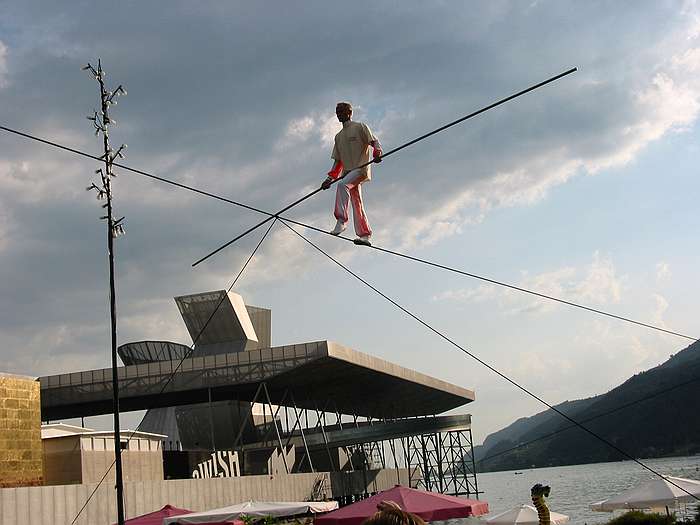
1.How do high-wire artists balance on such a thin wire? Why do they carry such long poles?

2.How do ski jumpers use physics to get the most out of their flight?

attention! BSBA-1A : Assignment #3


1.If you fell into a swimming pool full of Jello (gelatin), would you be able to swim to the other side? —
(pls. refer to solid or liquid properties...) .

2.Will the future of the Universe go on forever or not? Will there be a "big crunch" at some future time, will the Universe keep on expanding forever, or what?

Sunday, July 09, 2006

baliwala...


Since a very long time ago, people have searched for the meaning of love. But even the great philosophers, with their profound definitions, could not fully touch its true essence. In a survey of 4-8 year olds, kids share their views on love. But what do little kids know about love? Read on and be surprised that despite their young and innocent minds, kids already have a simple but deep grasp of that four-letter word."Love is that first feeling you feel before all the bad stuff gets in the way.""When my grandmother got arthritis, she couldn't bend over and paint her toenails anymore. So my grandfather does it for her all the time, even when his hands got arthritis too. That's love.""When someone loves you, the way she says your name is different. You know that your name is safe in her mouth.""Love is when a girl puts on perfume and a boy puts on shaving cologne and they go out and smell each other."

Wednesday, April 19, 2006

moon, mars and beyond...


Moon: By going to the moon for extended periods of time, astronauts will search for resources and learn how to work safely in a harsh environment -- stepping stones to future exploration. The moon also offers many clues about the time when the planets were formed. Image above: Concept of a future moon landing. Credit: NASA/John Frassanito and Associates Mars: Robotic missions have found evidence of a watery past, suggesting that simple life forms may have developed long ago and may persist beneath the surface today. Human exploration could provide answers to some profound questions. Beyond: As humans and robots work together exploring the moon and Mars, NASA spacecraft will continue to send back scientific data from throughout the solar system, laying the groundwork for potential human journeys.

the art of dressing the dead!


Embalming is the funeral custom of cleansing and disinfecting bodies after death. As far back as the ancient Egyptians, people have used oils, herbs and special body preparations to help preserve the bodies of their dead. Yet no process or products have been devised to preserve a body in the grave indefinitely.
The
Federal Trade Commission Funeral Rule prohibits funeral providers from telling consumers that it can be done. For example, funeral providers may not claim that either embalming or a particular type of casket will preserve the body of the deceased for an unlimited time.
In practice since ancient Egypt, embalming is most often done by using chemical substances. We use embalming today for two primary reasons--to allow adequate time between death and burial to observe social customs such as visitations and funeral services, and to prevent the spread of infection. Cosmetic work is often used for aesthetic reasons.
Modern embalming now consists primarily of removing all blood and gases from the body and the insertion of a disinfecting fluid. Small incisions are made in either the carotid or femoral artery and the jugular or femoral vein; the disinfecting fluid is injected through the carotid or femoral artery, and the blood is drained from the jugular or femoral vein.
If an autopsy is being performed, the vital organs are removed and immersed in an embalming fluid, and then replaced in the body, often surrounded by a preservative powder. If an autopsy is not performed, the embalmer aspirates fluids out of the body cavity by making a small incision near the navel and aspirating the bodily fluids. Most bodies in the USA and Canada are embalmed, though it is not required by law in most cases.
The Federal Trade Commission has included statements about embalming in the Funeral Rule, which guides funeral service providers in offering services and products to consumers.
The Funeral Rule statement on embalming requires funeral service providers to inform consumers that the law does not require embalming (unless in a specific special case when it does). The language the FTC requires says:
"Except in certain special cases, embalming is not required by law. Embalming may be necessary, however, if you select certain funeral arrangements, such as a funeral with viewing. If you do not want embalming, you usually have the right to choose an arrangement that does not require you to pay for it, such as direct cremation or immediate burial."
Funeral service providers do not need to include the phrase "except in certain special cases" if the state or local law in the area where they do business doesn't require embalming under any circumstances. However, if funeral service providers want to add information about state law requirements, they may do so after the FTC disclosure. This disclosure should appear in immediate conjunction with the price for embalming.

Thursday, December 15, 2005

su per man ...


There was buzz last week in Radar (and summarized by Martha) that Brandon Routh only got the role of Superman because director Bryan Singer thought he'd look super in a pair of tights. That post sparked a lot of comments ("Give me a break!!!! This is just homophobe crap!" - Wil; "Cinematical reaches a new low!" - Alexei), so I thought you'd like to know that the Routh rumors are getting ever more salacious. Various UK tabloids (we picked it up through The Movie Blog) are reporting that the bulge in Routh's tights is apparently so apparent that Warner Brothers is considering using digital trickery to cover it up. I seem to remember the exact same rumor popping up (no pun intended) when George Clooney was cast as Batman, but no matter – here's the quote:"It's a major issue for the studio. Brandon is extremely well endowed and they don't want it up on the big screen ... We may be forced to erase his package with digital effects."Alright, kids – procede to fight amongst yourselves.

Tuesday, November 08, 2005

an island Paradise/


"THERE was a time when we would set up our pots and a fire on the beach, close to the water. We would then paddle the water and the fish would jump out of the sea, straight into the pots! That was how much fish we had then!"
That was Toti Menguito, guardian of the Gilutongan Marine Sanctuary in Cordova town in the province of Cebu, describing what it was like at one time on his island to a group of about a dozen visitors from different organizations invited to visit their project.
Was he giving us a fish tale? I don't think so. It wasn't the first time I've heard such stories from Filipino fisherfolk. They all talk of a time, not too long ago, when the oceans and rivers were filled with fish. And as an anthropologist, I can believe that, because all over the Philippines, I've found that many of the traditional fishing gear that's been developed-rattan baskets for example-were clearly meant for fishing not too far from the shore.
My guess then is that Toti wasn't exaggerating about the abundance of fish in Gilutongan. Even today, the area around Gilutongan still has some marine resources that residents are trying very hard to preserve through their marine sanctuary, one that is managed by the community, from patrolling the waters to doing periodic reef checks to see if they had managed to slow down the destruction of marine life to family planning education.
Now, you might ask, how did family planning get into the picture? Several Filipino nongovernmental organizations (NGOs), notably Path Philippines and Save the Children, are now combining family planning with environment programs, which really makes sense. We can't keep romanticizing environmental conservation by reducing it to an admiration of mountains and trees and birds; we have to deal with the human population that depletes and destroys these resources.
The stress on the environment is always most obvious in coastal communities. Maybe because our marine resources were once so abundant, coastal areas have always attracted settlers who, perhaps because of the easy life, quickly grew. The demographic surveys have always shown fishing communities to have higher fertility rates. In Gilutongan, I found several households with more than six children, with gaps of about a year between siblings. In one case, there was a couple with six children occupying a hut not more than 10 square meters, the space used as a bedroom, kitchen, living room. The mother was 36 years old but looked like she was in her 50s.
Everywhere I went there were children with scabies and other skin infections, their stomachs bloated from intestinal worms. Childhood ends early in such a setting-there was an 11-year old boy, stunted and underweight, who came in with some fish he had caught. Path's survey shows that in these communities, the males are dropping out earlier from school to help with fishing.
The options are narrowing for fishing communities, the seas not even providing enough for a family's subsistence needs. A report from the Department of Environment notes that fisherfolk in the area sometimes have to go fishing in Bohol, Surigao, Palawan or even as far as Malaysia to bring in aquarium fish, abalone, octopus, sea cucumber, and sharks' fin, all of which are meant for export. They do this using the simplest of equipment, described as pinobreng panagat (poor man's gear) that cannot compete with large commercial fishing ventures. The temptation to use cyanide is always there.
Gilutongan has developed alternative livelihoods. There's some seaweed farming going on. There's an eco-tourism program that charges entrance fees to divers, and it's been quite successful, bringing in some two million pesos in fees, part of which has gone back into community development, including the construction of a guardhouse and the installation of solar power. But the island still does not have its own health center or health personnel. Neither does it have a potable water supply. Residents are also aware that tourism, even eco-tourism, has its risks, and are thinking of imposing a quota on visitors.
When I visited, the island was already inundated with election posters and stickers. One sticker caught my eye, something about "Kontra Aborsyon" (against abortion). I asked about the sticker, but no one was sure which candidate had put it up. I found it almost a cruel joke, trying to get elected on an anti-abortion platform. This is an island where the most basic health services are not available, where family planning was only recently introduced. Here, women become pregnant year after year and abortion is probably not an option -- no money and lots of gossip.
It was a hot day when I visited, but I decided against going out swimming. Some of those who did go out came back glowing, describing the colorful corals and fish, and how you could just float there all day in perfect bliss, in this tropical paradise. Unfortunately, for too many of the children in these fishing communities, the reality is that of paradise lost.

Spiritualitiessssssssss....


WHO can ever forget that grand Hollywood production, "The Ten Commandments"? Think, too, of how it has influenced the way we look at ethics and morality as rules set in stone, literally handed down by God amid thunder and lightning, to be followed word for word, through all time.
I am sure there are similar interpretations of ethics in other religions, "being good" identified with religiosity, with rituals and prayers and following prescribed rules of what to do and what not to do accompanied by threats of reward (heaven) and punishment (hell or purgatory).
Lately, people have started to talk of the need for spirituality, which I think is a positive move in the way it refers to a world-view, a sense of right or wrong, that comes out of critical reflection and discernment. Unfortunately though, words have a way of becoming trivialized and sometimes I suspect people still mean "religiosity" when they talk about the need for "spirituality." I hear references, for example, to "Catholic spirituality," implying some absolute monolithic model, again handed down from the heavens like in a Hollywood film. This usage again defines one's own group as distinct from "others," usually implying one's own "spirituality" is superior to that of others.
In reality, there are many different Catholic spiritualities, and even more variations of Christian spiritualities, all of them ways of trying to be like Christ, or at least an aspect of Christ. These spiritualities are often associated with particular religious orders, reflecting the thinking of its founders who, in turn, were shaped by the historical circumstances in which they lived.
That's a lot of words to process, so let's get straight to some examples which I'm drawing from a book by Chris Lowney called "Heroic Leadership," which focuses on Jesuit spirituality (another column, I promise) and a lecture in 2002 by the Ateneo de Manila University's Father Bienvenido Nebres.
We start off with Benedictine spirituality. The Benedictine order was established in the 6th century, at a time when Europe was in ferment, slowly slipping into what has been called the Dark Ages, as Attila the Hun and his "barbaric" hordes destroyed what was left of the Roman Empire.
Benedictine spirituality sought to retreat from the chaos of the outside world, offering order through monastic life and discipline. Benedictine monks had to take a vow of stability, agreeing to stay in a monastic house until they died, their lives revolving around the rhythm of prayers, seven times a day from Matins at 2 a.m. to the Compline at 7 p.m.
It wasn't all prayer in the monasteries-the monks appreciated the dignity of labor, growing their own food and becoming quite self-sufficient. What was striking about the Benedictines was that they never really retreated from the world, their monasteries actually open to visitors and the outside world. Today, some Benedictines generate income through computer work, still faithful to their sixth-century principle of Order through Labor.
The Franciscans emerged several centuries later, in the 12th century. Europe was moving out of the Dark Ages, with urban centers developing together with a new and affluent merchant class. Against this backdrop, we have Francis of Assisi developing a religious order that rejected the lifestyles of the rich, seeking to identify with the poor Christ. Franciscan spirituality comes closest to current New Age philosophies, with an emphasis on harmony with nature and simplicity. Saint Francis' feast day is used, even today, for a blessing of pets, commemorating his own closeness to nature.
The Dominicans were contemporaries of the Franciscans, established literally as Ordo Praecatorium (O.P.), the Order of Preachers. They were established at a time when the Catholic Church was highly factionalized, with the groups attacking each other as heretics. The Order of Preachers was there to uphold The Faith. To this day, Dominican schools emphasize theology and philosophy, and are generally thought of as conservatives although there are in fact Dominicans today who believe that preaching includes defense of the poor and upholding social justice.
The Society of Jesus was established in the 16th century, at a time when Protestantism was rapidly growing, literally in protest against the Catholic religious' excesses. The Jesuits' founder was a former soldier, and drew from the military for many of his religious metaphors. Instead of retreating from the world, the Jesuits chose to engage the world, setting off for the most difficult and remote places.
Our schools -- Catholic, Protestant, Muslim, or secular, as with government institutions -- need to make students more conscious of the different spiritualities that exist, how they came about, and how the spiritualities need to respond to the needs of our times, as they did in the past.
I studied in Jesuit schools for 12 years and am realizing how this education continues to shape my view of the world, sometimes in paradoxical ways. I think of how my staying in the University of the Philippines and (so far) resisting invitations to join the Ateneo de Manila full-time could in fact be a function of this Jesuit upbringing and spirituality, this sense that we need to give priority to hardship areas like the University of the Philippines!
We might want to ask ourselves, too, if our problems as a nation might have come about because we have imbibed too little of spirituality, and too much of the trappings of religion with its emphasis on public performances of piety and charity, its holier-than-thou sectarianism, its intolerant and divisive dogmatism.
Our redemption as a nation may yet come as we learn from the different spiritualities that women and men have developed through the ages, responding to the needs of their times. Even limiting ourselves to the four "Catholic" spiritualities I just described, we will find they offer many lessons for life.
The Jesuits remind us that Christ did engage the world, often with great passion, but the Franciscans remind us Christ did all this without armies, without material wealth. (Some) Dominicans remind us we need to preach, but that Christ was most effective when he preached through deeds.
And the Benedictines, I will admit they do "tempt" me too with their reminders that while we might want to engage the world, we should guard against being engulfed by it, and that there will be times, too, when we need to build peace within our own homes and our hearts, without having to set up walls.

c h i l d b r i d e s


THEY'RE married off at the rate of 25,000 each day. That's each day, not each year.
Child brides are those who are married before the age of 18. In several countries, these young marriages are actually the norm. The International Center for Research on Women (ICRW) gives some startling figures, noting that in Niger, 82 percent of girls would have been married by the age of 18. In Bangladesh, the figure is 75 percent, in Mali it's 63 percent, in Ethiopia and India it's 57 percent.
Some readers are probably not too shocked, having seen teenagers getting married, but when we talk about child brides, we include quite a large number of very young girls. In Nepal, according to the ICRW, 7 percent of girls are married before the age of 10. By the age of 15, 40 percent would have been married.
Again, one could be callous and ask, "So?" Mary, the mother of Jesus, was probably about 14 or 15 when she was pregnant, again reflecting norms that persisted for many centuries in many societies. Many of us, myself included, might in fact have grandmothers or great-grandmothers who were married at a very young age.
Last week I attended the Global Health Council's annual conference in Washington and one of the main themes discussed was early marriage, with several papers discussing the terrible consequences on individuals and on societies of such traditions.
Some of the problems these child brides face deal with biology. Sexual intercourse, pregnancy and childbirth all carry risks for these young girls because their bodies aren't quite prepared for the physiological stress. There are all kinds of complications accompanying pregnancy, including a prolapse of the uterus (buwa in Filipino). A Tagalog aphorism about a pregnant woman having one foot in the grave probably grew out of observations of the many young girls who died delivering a child (literally, a child delivering a child, when you think about it).
I was struck though by one of the presentations at the Global Health Council meeting where they showed death rates of young mothers. The figures were astronomically high for developing countries, but when they showed the figures for teenage mothers in the United States, the death rate was miniscule. The point made by the speaker was that the health risks for child brides go beyond biology and may in fact be largely determined by society and culture, such as the type of health care provided.
Certainly, there's a world of a difference between a 13-year-old American girl and her counterpart in, say, Bangladesh. Young girls in Third World countries are much more vulnerable because they are practically powerless. They are married off to men they may have never seen before. Once married, they become their husband's property, there to serve the husband's family and to bear his children. In such settings, they are much more prone to abuse from the husband and his family.
In many countries, the power inequality between the bride and the groom is amplified by a large age difference, meaning the male is often much older than the child brides. Dr. Judith Bruce of the Population Council pointed out how this age difference increases the risks of the child brides for sexually transmitted infections, including HIV/AIDS: Because the men are older, they would have had more sexual partners, including the possibilities of having acquired HIV/AIDS. In other cases, these older men continue to have unprotected sex with many partners even after marrying the young bride.
Bruce had statistics to show that these child brides are at greater risk of being infected with HIV because as someone who is married, they have sex more often than a sexually active single girl, and that sex is almost always unprotected since obviously she cannot ask her husband to use a condom. In fact, these young brides are often under intense pressure to start having children as early as possible.
Bruce and the other speakers emphasized that this tradition of early marriage is part of a cycle of poverty. It is mainly in poor families where you have early marriage. In urban slums and rural areas, parents will not invest in the education of their daughters because they see them as liabilities, girls who will leave them eventually. Sometimes, the poverty pushes them to marry off their daughters as early as possible.
Once married, these girls will no longer be able to stay in school. They tend to be socially isolated, sequestered at home to raise another generation of children where daughters are again deprived of opportunities to break out of the intergenerational cycles of early marriage and poverty.
Ultimately, society pays for this. The young brides, as well as their children, face greater risks for illness and death. The young brides also represent "wasted human capital," reduced to becoming baby-makers.
What's the situation in the Philippines? Officially, our Family Code prescribes a minimum age of 18 for marriage, but there are quite a number of exceptions here. Indigenous communities, for example, are allowed to use custom law for marriages, which can mean very young brides and grooms.
In addition, Presidential Decree 1083, issued during the time of Marcos, prescribes Sharia or Islamic law for marriages, allowing "any Muslim male at least fifteen years of age and any Muslim female of the age of puberty or upwards" to get married. The law actually states that a Sharia court can order marriage for a girl aged between 12 and 15.
Many of these early marriages among cultural minorities and Muslims will be arranged, which means the young brides have little negotiating power to protect themselves from abuse.
Let's not forget, too, that even among Christian Filipinos, it's common to fake the age of a young couple where the girl has become pregnant and the family wants to rush a marriage. To avoid social stigma, a young girl is condemned to an early marriage. The only consolation we have here is that in these situations, the early pregnancy and marriage are more likely to have occurred because of courtship, involving a young male and female. The power inequality would not be as problematic, but "love" itself, as we know too well, doesn't necessarily mean a better life for the young couple, especially the bride.
I have a student who is doing her doctoral research on these young couples, her research site being a typical lowland Christian community in one of the Central Luzon provinces. I'm hoping other graduate students will do similar research in other settings, including our cultural minority groups, on a topic around which there's too much silence, and acceptance.