Tuesday, September 19, 2006

this is strictly for BSBA-1A & 1B!!!!!!!


.....i really miss the time u have had your first assignment in this site...hehehehe! so again answer the following:
1.What is the evidence for the Big Bang?
2.What happened during the Big Bang?
3.What is this "anti-gravity"? [The cosmological constant]
4.Why do we think that the expansion of the Universe is accelerating?
5.What is quintessence?
6.How old is the Universe?
7.Is the Universe really infinite or just really big?

....pls. accomplish this on or before monday (sept. 25, 2006) 10pm.(this would be the deadliest deadline...)
.....nice dating with my blog..........mwahhhhhhh!!!!!

attention bshrm-2A......eyes here!


...let's refresh our knowledge in immune system......ok?

1. What part of the immune system is part of the body's defenses that target specific foreign invaders?
2. What are the effects of histamine?
3. Discuss the compliment system. How does it kill bacterial cells? How does it enhance antigen-antibody interactions? Does it attract phagocytes or increase the probability that a bacterial cell will be engulfed?
4. Where do B lymphocytes mature? Do B cells contain receptor molecules?
5. Discuss clonal selection. Discuss how specific antibodies are produced.
6. Discuss passive immunity and give an example.

.....exhausted?......hehehehe....

hey there BSHRM-2B!!!!!!!


...LET ME ASK YOU THE FOLLOWING....
What is DNA?
Is DNA dangerous?
Is DNA from genetically engineered organisms dangerous?
Can DNA (from genetically engineered organisms) mutate me?
Can DNA "left over" from genetic engineering infect other organisms?
What is mutation?
Is mutation bad?

thanks a lot for the time.....pls. do this on or before 10pm friday (sept. 22, 2006) .....have a nice day!

Thursday, July 13, 2006

eyes here! BSBA 1B: Assignment 2


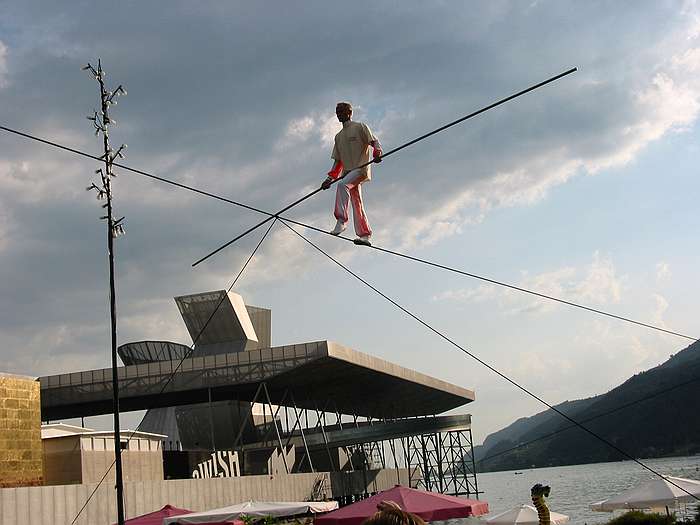
1.How do high-wire artists balance on such a thin wire? Why do they carry such long poles?

2.How do ski jumpers use physics to get the most out of their flight?

attention! BSBA-1A : Assignment #3


1.If you fell into a swimming pool full of Jello (gelatin), would you be able to swim to the other side? —
(pls. refer to solid or liquid properties...) .

2.Will the future of the Universe go on forever or not? Will there be a "big crunch" at some future time, will the Universe keep on expanding forever, or what?

Sunday, July 09, 2006

baliwala...


Since a very long time ago, people have searched for the meaning of love. But even the great philosophers, with their profound definitions, could not fully touch its true essence. In a survey of 4-8 year olds, kids share their views on love. But what do little kids know about love? Read on and be surprised that despite their young and innocent minds, kids already have a simple but deep grasp of that four-letter word."Love is that first feeling you feel before all the bad stuff gets in the way.""When my grandmother got arthritis, she couldn't bend over and paint her toenails anymore. So my grandfather does it for her all the time, even when his hands got arthritis too. That's love.""When someone loves you, the way she says your name is different. You know that your name is safe in her mouth.""Love is when a girl puts on perfume and a boy puts on shaving cologne and they go out and smell each other."

Wednesday, April 19, 2006

moon, mars and beyond...


Moon: By going to the moon for extended periods of time, astronauts will search for resources and learn how to work safely in a harsh environment -- stepping stones to future exploration. The moon also offers many clues about the time when the planets were formed. Image above: Concept of a future moon landing. Credit: NASA/John Frassanito and Associates Mars: Robotic missions have found evidence of a watery past, suggesting that simple life forms may have developed long ago and may persist beneath the surface today. Human exploration could provide answers to some profound questions. Beyond: As humans and robots work together exploring the moon and Mars, NASA spacecraft will continue to send back scientific data from throughout the solar system, laying the groundwork for potential human journeys.

the art of dressing the dead!


Embalming is the funeral custom of cleansing and disinfecting bodies after death. As far back as the ancient Egyptians, people have used oils, herbs and special body preparations to help preserve the bodies of their dead. Yet no process or products have been devised to preserve a body in the grave indefinitely.
The
Federal Trade Commission Funeral Rule prohibits funeral providers from telling consumers that it can be done. For example, funeral providers may not claim that either embalming or a particular type of casket will preserve the body of the deceased for an unlimited time.
In practice since ancient Egypt, embalming is most often done by using chemical substances. We use embalming today for two primary reasons--to allow adequate time between death and burial to observe social customs such as visitations and funeral services, and to prevent the spread of infection. Cosmetic work is often used for aesthetic reasons.
Modern embalming now consists primarily of removing all blood and gases from the body and the insertion of a disinfecting fluid. Small incisions are made in either the carotid or femoral artery and the jugular or femoral vein; the disinfecting fluid is injected through the carotid or femoral artery, and the blood is drained from the jugular or femoral vein.
If an autopsy is being performed, the vital organs are removed and immersed in an embalming fluid, and then replaced in the body, often surrounded by a preservative powder. If an autopsy is not performed, the embalmer aspirates fluids out of the body cavity by making a small incision near the navel and aspirating the bodily fluids. Most bodies in the USA and Canada are embalmed, though it is not required by law in most cases.
The Federal Trade Commission has included statements about embalming in the Funeral Rule, which guides funeral service providers in offering services and products to consumers.
The Funeral Rule statement on embalming requires funeral service providers to inform consumers that the law does not require embalming (unless in a specific special case when it does). The language the FTC requires says:
"Except in certain special cases, embalming is not required by law. Embalming may be necessary, however, if you select certain funeral arrangements, such as a funeral with viewing. If you do not want embalming, you usually have the right to choose an arrangement that does not require you to pay for it, such as direct cremation or immediate burial."
Funeral service providers do not need to include the phrase "except in certain special cases" if the state or local law in the area where they do business doesn't require embalming under any circumstances. However, if funeral service providers want to add information about state law requirements, they may do so after the FTC disclosure. This disclosure should appear in immediate conjunction with the price for embalming.

Thursday, December 15, 2005

su per man ...


There was buzz last week in Radar (and summarized by Martha) that Brandon Routh only got the role of Superman because director Bryan Singer thought he'd look super in a pair of tights. That post sparked a lot of comments ("Give me a break!!!! This is just homophobe crap!" - Wil; "Cinematical reaches a new low!" - Alexei), so I thought you'd like to know that the Routh rumors are getting ever more salacious. Various UK tabloids (we picked it up through The Movie Blog) are reporting that the bulge in Routh's tights is apparently so apparent that Warner Brothers is considering using digital trickery to cover it up. I seem to remember the exact same rumor popping up (no pun intended) when George Clooney was cast as Batman, but no matter – here's the quote:"It's a major issue for the studio. Brandon is extremely well endowed and they don't want it up on the big screen ... We may be forced to erase his package with digital effects."Alright, kids – procede to fight amongst yourselves.

Tuesday, November 08, 2005

an island Paradise/


"THERE was a time when we would set up our pots and a fire on the beach, close to the water. We would then paddle the water and the fish would jump out of the sea, straight into the pots! That was how much fish we had then!"
That was Toti Menguito, guardian of the Gilutongan Marine Sanctuary in Cordova town in the province of Cebu, describing what it was like at one time on his island to a group of about a dozen visitors from different organizations invited to visit their project.
Was he giving us a fish tale? I don't think so. It wasn't the first time I've heard such stories from Filipino fisherfolk. They all talk of a time, not too long ago, when the oceans and rivers were filled with fish. And as an anthropologist, I can believe that, because all over the Philippines, I've found that many of the traditional fishing gear that's been developed-rattan baskets for example-were clearly meant for fishing not too far from the shore.
My guess then is that Toti wasn't exaggerating about the abundance of fish in Gilutongan. Even today, the area around Gilutongan still has some marine resources that residents are trying very hard to preserve through their marine sanctuary, one that is managed by the community, from patrolling the waters to doing periodic reef checks to see if they had managed to slow down the destruction of marine life to family planning education.
Now, you might ask, how did family planning get into the picture? Several Filipino nongovernmental organizations (NGOs), notably Path Philippines and Save the Children, are now combining family planning with environment programs, which really makes sense. We can't keep romanticizing environmental conservation by reducing it to an admiration of mountains and trees and birds; we have to deal with the human population that depletes and destroys these resources.
The stress on the environment is always most obvious in coastal communities. Maybe because our marine resources were once so abundant, coastal areas have always attracted settlers who, perhaps because of the easy life, quickly grew. The demographic surveys have always shown fishing communities to have higher fertility rates. In Gilutongan, I found several households with more than six children, with gaps of about a year between siblings. In one case, there was a couple with six children occupying a hut not more than 10 square meters, the space used as a bedroom, kitchen, living room. The mother was 36 years old but looked like she was in her 50s.
Everywhere I went there were children with scabies and other skin infections, their stomachs bloated from intestinal worms. Childhood ends early in such a setting-there was an 11-year old boy, stunted and underweight, who came in with some fish he had caught. Path's survey shows that in these communities, the males are dropping out earlier from school to help with fishing.
The options are narrowing for fishing communities, the seas not even providing enough for a family's subsistence needs. A report from the Department of Environment notes that fisherfolk in the area sometimes have to go fishing in Bohol, Surigao, Palawan or even as far as Malaysia to bring in aquarium fish, abalone, octopus, sea cucumber, and sharks' fin, all of which are meant for export. They do this using the simplest of equipment, described as pinobreng panagat (poor man's gear) that cannot compete with large commercial fishing ventures. The temptation to use cyanide is always there.
Gilutongan has developed alternative livelihoods. There's some seaweed farming going on. There's an eco-tourism program that charges entrance fees to divers, and it's been quite successful, bringing in some two million pesos in fees, part of which has gone back into community development, including the construction of a guardhouse and the installation of solar power. But the island still does not have its own health center or health personnel. Neither does it have a potable water supply. Residents are also aware that tourism, even eco-tourism, has its risks, and are thinking of imposing a quota on visitors.
When I visited, the island was already inundated with election posters and stickers. One sticker caught my eye, something about "Kontra Aborsyon" (against abortion). I asked about the sticker, but no one was sure which candidate had put it up. I found it almost a cruel joke, trying to get elected on an anti-abortion platform. This is an island where the most basic health services are not available, where family planning was only recently introduced. Here, women become pregnant year after year and abortion is probably not an option -- no money and lots of gossip.
It was a hot day when I visited, but I decided against going out swimming. Some of those who did go out came back glowing, describing the colorful corals and fish, and how you could just float there all day in perfect bliss, in this tropical paradise. Unfortunately, for too many of the children in these fishing communities, the reality is that of paradise lost.

Spiritualitiessssssssss....


WHO can ever forget that grand Hollywood production, "The Ten Commandments"? Think, too, of how it has influenced the way we look at ethics and morality as rules set in stone, literally handed down by God amid thunder and lightning, to be followed word for word, through all time.
I am sure there are similar interpretations of ethics in other religions, "being good" identified with religiosity, with rituals and prayers and following prescribed rules of what to do and what not to do accompanied by threats of reward (heaven) and punishment (hell or purgatory).
Lately, people have started to talk of the need for spirituality, which I think is a positive move in the way it refers to a world-view, a sense of right or wrong, that comes out of critical reflection and discernment. Unfortunately though, words have a way of becoming trivialized and sometimes I suspect people still mean "religiosity" when they talk about the need for "spirituality." I hear references, for example, to "Catholic spirituality," implying some absolute monolithic model, again handed down from the heavens like in a Hollywood film. This usage again defines one's own group as distinct from "others," usually implying one's own "spirituality" is superior to that of others.
In reality, there are many different Catholic spiritualities, and even more variations of Christian spiritualities, all of them ways of trying to be like Christ, or at least an aspect of Christ. These spiritualities are often associated with particular religious orders, reflecting the thinking of its founders who, in turn, were shaped by the historical circumstances in which they lived.
That's a lot of words to process, so let's get straight to some examples which I'm drawing from a book by Chris Lowney called "Heroic Leadership," which focuses on Jesuit spirituality (another column, I promise) and a lecture in 2002 by the Ateneo de Manila University's Father Bienvenido Nebres.
We start off with Benedictine spirituality. The Benedictine order was established in the 6th century, at a time when Europe was in ferment, slowly slipping into what has been called the Dark Ages, as Attila the Hun and his "barbaric" hordes destroyed what was left of the Roman Empire.
Benedictine spirituality sought to retreat from the chaos of the outside world, offering order through monastic life and discipline. Benedictine monks had to take a vow of stability, agreeing to stay in a monastic house until they died, their lives revolving around the rhythm of prayers, seven times a day from Matins at 2 a.m. to the Compline at 7 p.m.
It wasn't all prayer in the monasteries-the monks appreciated the dignity of labor, growing their own food and becoming quite self-sufficient. What was striking about the Benedictines was that they never really retreated from the world, their monasteries actually open to visitors and the outside world. Today, some Benedictines generate income through computer work, still faithful to their sixth-century principle of Order through Labor.
The Franciscans emerged several centuries later, in the 12th century. Europe was moving out of the Dark Ages, with urban centers developing together with a new and affluent merchant class. Against this backdrop, we have Francis of Assisi developing a religious order that rejected the lifestyles of the rich, seeking to identify with the poor Christ. Franciscan spirituality comes closest to current New Age philosophies, with an emphasis on harmony with nature and simplicity. Saint Francis' feast day is used, even today, for a blessing of pets, commemorating his own closeness to nature.
The Dominicans were contemporaries of the Franciscans, established literally as Ordo Praecatorium (O.P.), the Order of Preachers. They were established at a time when the Catholic Church was highly factionalized, with the groups attacking each other as heretics. The Order of Preachers was there to uphold The Faith. To this day, Dominican schools emphasize theology and philosophy, and are generally thought of as conservatives although there are in fact Dominicans today who believe that preaching includes defense of the poor and upholding social justice.
The Society of Jesus was established in the 16th century, at a time when Protestantism was rapidly growing, literally in protest against the Catholic religious' excesses. The Jesuits' founder was a former soldier, and drew from the military for many of his religious metaphors. Instead of retreating from the world, the Jesuits chose to engage the world, setting off for the most difficult and remote places.
Our schools -- Catholic, Protestant, Muslim, or secular, as with government institutions -- need to make students more conscious of the different spiritualities that exist, how they came about, and how the spiritualities need to respond to the needs of our times, as they did in the past.
I studied in Jesuit schools for 12 years and am realizing how this education continues to shape my view of the world, sometimes in paradoxical ways. I think of how my staying in the University of the Philippines and (so far) resisting invitations to join the Ateneo de Manila full-time could in fact be a function of this Jesuit upbringing and spirituality, this sense that we need to give priority to hardship areas like the University of the Philippines!
We might want to ask ourselves, too, if our problems as a nation might have come about because we have imbibed too little of spirituality, and too much of the trappings of religion with its emphasis on public performances of piety and charity, its holier-than-thou sectarianism, its intolerant and divisive dogmatism.
Our redemption as a nation may yet come as we learn from the different spiritualities that women and men have developed through the ages, responding to the needs of their times. Even limiting ourselves to the four "Catholic" spiritualities I just described, we will find they offer many lessons for life.
The Jesuits remind us that Christ did engage the world, often with great passion, but the Franciscans remind us Christ did all this without armies, without material wealth. (Some) Dominicans remind us we need to preach, but that Christ was most effective when he preached through deeds.
And the Benedictines, I will admit they do "tempt" me too with their reminders that while we might want to engage the world, we should guard against being engulfed by it, and that there will be times, too, when we need to build peace within our own homes and our hearts, without having to set up walls.

c h i l d b r i d e s


THEY'RE married off at the rate of 25,000 each day. That's each day, not each year.
Child brides are those who are married before the age of 18. In several countries, these young marriages are actually the norm. The International Center for Research on Women (ICRW) gives some startling figures, noting that in Niger, 82 percent of girls would have been married by the age of 18. In Bangladesh, the figure is 75 percent, in Mali it's 63 percent, in Ethiopia and India it's 57 percent.
Some readers are probably not too shocked, having seen teenagers getting married, but when we talk about child brides, we include quite a large number of very young girls. In Nepal, according to the ICRW, 7 percent of girls are married before the age of 10. By the age of 15, 40 percent would have been married.
Again, one could be callous and ask, "So?" Mary, the mother of Jesus, was probably about 14 or 15 when she was pregnant, again reflecting norms that persisted for many centuries in many societies. Many of us, myself included, might in fact have grandmothers or great-grandmothers who were married at a very young age.
Last week I attended the Global Health Council's annual conference in Washington and one of the main themes discussed was early marriage, with several papers discussing the terrible consequences on individuals and on societies of such traditions.
Some of the problems these child brides face deal with biology. Sexual intercourse, pregnancy and childbirth all carry risks for these young girls because their bodies aren't quite prepared for the physiological stress. There are all kinds of complications accompanying pregnancy, including a prolapse of the uterus (buwa in Filipino). A Tagalog aphorism about a pregnant woman having one foot in the grave probably grew out of observations of the many young girls who died delivering a child (literally, a child delivering a child, when you think about it).
I was struck though by one of the presentations at the Global Health Council meeting where they showed death rates of young mothers. The figures were astronomically high for developing countries, but when they showed the figures for teenage mothers in the United States, the death rate was miniscule. The point made by the speaker was that the health risks for child brides go beyond biology and may in fact be largely determined by society and culture, such as the type of health care provided.
Certainly, there's a world of a difference between a 13-year-old American girl and her counterpart in, say, Bangladesh. Young girls in Third World countries are much more vulnerable because they are practically powerless. They are married off to men they may have never seen before. Once married, they become their husband's property, there to serve the husband's family and to bear his children. In such settings, they are much more prone to abuse from the husband and his family.
In many countries, the power inequality between the bride and the groom is amplified by a large age difference, meaning the male is often much older than the child brides. Dr. Judith Bruce of the Population Council pointed out how this age difference increases the risks of the child brides for sexually transmitted infections, including HIV/AIDS: Because the men are older, they would have had more sexual partners, including the possibilities of having acquired HIV/AIDS. In other cases, these older men continue to have unprotected sex with many partners even after marrying the young bride.
Bruce had statistics to show that these child brides are at greater risk of being infected with HIV because as someone who is married, they have sex more often than a sexually active single girl, and that sex is almost always unprotected since obviously she cannot ask her husband to use a condom. In fact, these young brides are often under intense pressure to start having children as early as possible.
Bruce and the other speakers emphasized that this tradition of early marriage is part of a cycle of poverty. It is mainly in poor families where you have early marriage. In urban slums and rural areas, parents will not invest in the education of their daughters because they see them as liabilities, girls who will leave them eventually. Sometimes, the poverty pushes them to marry off their daughters as early as possible.
Once married, these girls will no longer be able to stay in school. They tend to be socially isolated, sequestered at home to raise another generation of children where daughters are again deprived of opportunities to break out of the intergenerational cycles of early marriage and poverty.
Ultimately, society pays for this. The young brides, as well as their children, face greater risks for illness and death. The young brides also represent "wasted human capital," reduced to becoming baby-makers.
What's the situation in the Philippines? Officially, our Family Code prescribes a minimum age of 18 for marriage, but there are quite a number of exceptions here. Indigenous communities, for example, are allowed to use custom law for marriages, which can mean very young brides and grooms.
In addition, Presidential Decree 1083, issued during the time of Marcos, prescribes Sharia or Islamic law for marriages, allowing "any Muslim male at least fifteen years of age and any Muslim female of the age of puberty or upwards" to get married. The law actually states that a Sharia court can order marriage for a girl aged between 12 and 15.
Many of these early marriages among cultural minorities and Muslims will be arranged, which means the young brides have little negotiating power to protect themselves from abuse.
Let's not forget, too, that even among Christian Filipinos, it's common to fake the age of a young couple where the girl has become pregnant and the family wants to rush a marriage. To avoid social stigma, a young girl is condemned to an early marriage. The only consolation we have here is that in these situations, the early pregnancy and marriage are more likely to have occurred because of courtship, involving a young male and female. The power inequality would not be as problematic, but "love" itself, as we know too well, doesn't necessarily mean a better life for the young couple, especially the bride.
I have a student who is doing her doctoral research on these young couples, her research site being a typical lowland Christian community in one of the Central Luzon provinces. I'm hoping other graduate students will do similar research in other settings, including our cultural minority groups, on a topic around which there's too much silence, and acceptance.

Thursday, October 20, 2005

The Teacher-Student Relationship


by : Jose Arvin Mesa Dogillo

(1) The one extreme is the idea that goes something like this: "Me teacher. You student. You do, think and act exactly as I command if you want to learn or be anything."
(2) The other extreme: "There are no teachers and no students for we are all teachers, and we are all students. One person is not above another and everyone's words have equal value."
Even though people in these two camps see each other as an agent of evil and opposite to themselves, the concept espoused by each has the same effect.
And what is that?
That effect is to turn the student into a non-thinking animal, or "beast," as it is called in the Book of Revelations.
THE ILLUSION OF EXTREME #1 There are many problems associated with Extreme One.
(1) No earthly teacher is flawless. Therefore, if you are limited to learning exactly according to the mindset of the teacher you will also inherit his flaws.
(2) This black and white method of teaching only allows for the dissemination of facts and not principles. It takes a thousand facts to create the understanding of one principle, but one principle can reveal an infinite number of facts. Therefore an enlightened teacher will stimulate understanding of principles.
For instance, the Keys of Knowledge are centered around principles and cannot be revealed as mere facts, or they will not be comprehended.
We will talk more about principles and facts in future books and writings.
(3) This method takes away freedom of thought. Instead of stimulating the student's own intuition by directing him toward his own soul, the teacher steals his thought process from him by demanding that he accept everything without question.
An example of an extreme failure of a student from this mindset is the religious fanatic who will kill himself and others with a bomb tied to his back so he can secure a place in heaven. Another example would be the Jim Jones group who committed mass suicide. Still another - the group that goes to the mountain top to be raptured (because their teacher set a certain date) only to discover that Jesus seemed to have changed his mind because they were just not good enough.
These are extreme examples, but all who follow the black and white teacher of the first extreme have their progress tied up to some degree in actions of a similar degree of ridiculousness.
THE ILLUSION OF EXTREME #2 This is the feel-good extreme, the seemingly safe extreme, the we-are-not-judging-each-other extreme. How could this extreme be negative if the intent is to establish equality?
Remember another extreme that tried to establish equality? It was and is called Communism. The ideal of equality sought in Communism has nothing wrong with it, but because it diffused individual thought, freedom and soul contact it turned into a great evil.
The great illusion of extreme #2 is that the basic ideal is good, but this ideal is attempted through illusion. True equality can only be achieved through true principles and freedom, not illusion.
The truth overlooked in extreme #2 is this: In the reality we are presently in, there are teachers and there are students. Even though there is an equality on the soul level we are very diverse on the physical, emotional and mental levels.
To understand this we must first define what a student and teacher is. The student and teacher are a symbol of the two basic energies of the universe which are represented as positive-negative; yin-yang; male-female; light-dark; hot-cold, and finally giving-receiving. These two energies flows or items are called the dualities. Wherever there is form there exists positive-negative, giving and receiving. Thus, in any relationship of two people one will be polarized as the teacher (giver) and the other as the student (the receiver).
Objection: In most relationships you are sometimes the teacher or giver, and other times the student and receiver. It seems egotistical to think of yourself as always the teacher.
Answer: All of us have within us the giving and receiving (positive-negative) principles, but we are talking about polarization here. If you are polarized as a male, this means you have more male energies within you than female. It does not mean that you do not have female energies available.
In a relationship, you both give and receive, but the giving and receiving is NEVER equal in this world. If you are giving more than receiving, then by default you become the teacher in the relationship. Because this statement is true and truth must be recognized to escape from this veil of illusion, then this student-teacher relationship must be recognized before true equality can even be dreamed of.
Let us take the relationship I have with Rick, the initiator of the Keys of Knowledge list. Overall I am polarized as his teacher, but the true teacher will always be open to receiving from the student when the opportunity permits. Rick gave me that opportunity by presenting the idea of a discussion group. Now if I saw that this was a bad idea I would have remained in the teaching position and taught him why it was a bad idea, but because I could find no reason to object I became obligated to become the student for a time and let him carry the ball and let him teach me. As long as the direction he was going registers well with my soul I am obligated as a disciple of truth to follow.
The highest of the Masters who have overcome physical death would see themselves polarized as a teacher in a relationship with any of us, yet they still recognize that we can do certain things better than they can. For example, most of us in the human kingdom understand that we are of much higher intelligence overall than any animal. No animal, for instance, would have any concept about building an automobile or spacecraft as man has done. But on the other hand, a human can never build a beaver damn as well as a beaver. Beavers already have the knowledge to build them better and faster than we can.
The relationship of the God Kingdom to man is similar in correspondence to the human kingdom and the animal. The attention of the Masters is set on many lofty ideas that man does not even comprehend, yet there are many things in the human world that man is more capable of performing well than is the Highest of Masters.
This is the main reason we do not see more of them, as the more directly they become involved by doing for us what we can do for ourselves, the more things get screwed up.
The powers that be learned this painful lesson during Atlantis. During part of this period the Masters associated much more freely with humans and gave them much knowledge that they were not yet ready to handle. The result was that the entire civilization was destroyed and we had to start over again.
The Masters learned their lesson and this time have committed themselves to only helping us when we cannot help ourselves. They do assist behind the scenes but only work through our personal desires and free will.
The goal at present is to move certain groups in the human kingdom towards alignment with the kingdom of God so heaven and earth can be brought together. This will result in a truly beneficial interplay between the two kingdoms that will assist rather than destroy humanity.
Now getting back to the Teacher-Student principle, I will say this. It is extremely important that this concept be recognized because without it we will be polarized on one of the above extremes; the only way we will advance toward the soul in that case is through tremendous pain. Discovering where your right place is in a relationship creates a detour around the pain and progression toward the greater light.
In the true student-teacher relationship authority is only recognized because it is earned.
Let's say you want to learn Spanish and two teachers surface who say they can teach you. They both seem equally convincing, but the truth is that one of them knows the language well and the other one does not. If you accept either as an authority just because he or someone else tells you to, then you have a 50-50 chance of getting a bad teacher. What do you do? You test the teacher. Have him actually speak some Spanish. Give him several paragraphs from English and see if he can translate and then check out the translation for correctness. Finally, you will establish in your mind that one of them can truly teach you.
Once you have tested your teacher then you do not have to check up on him in every little detail; but when you have learned the basics and want to go to advanced Spanish, you do need to check again to see if he has anything more for you or if you need to move on to another teacher. This point is dangerous ground for the student, for sometimes his false ego will convince him that he knows Spanish as well or better than the teacher when in reality he may not. In this case the student often goes off to teach before he has learned all the lessons.
To be a good student takes as much wisdom as it does to be a good teacher. In the case of spiritual teachings, the ultimate test of truth is from the inner self. This inner self, through the medium of the Soul, contacts and registers the Holy Spirit, which is capable of verifying all true principles. In short, this process is called "soul contact." Soul contact has little to do with facts, except in important circumstances, but it has much to do with principles. For instance, your soul may not verify to you what an inhabitant of Sirius looks like or how many there are, but it will verify to you the principle of life and its existence elsewhere in the universe.
If a man or woman comes forth and presents or is presented as a spiritual teacher, you must not accept him or her (we'll say "him" for simplicity) just because a claim is made. You must test him.
How do you test him? Listen to his words and test them with your soul. If your soul says no then drop him immediately. If your soul says nothing then test some more until you receive an inner response. When you finally do receive an inner response does this mean you should now accept the teacher?
Maybe yes, maybe no - because there is a true soul contact and a false one. There are many people who are sincere seekers who have never in their life received a true soul contact and therefore mistake a high emotional feeling for soul. This can be very deceptive and can produce the type of person who may have anything from a harmless delusion to one who will destroy others for his master. If you are not sure you have ever received soul contact it means you have not - at least in fullness. When you do, you recognize it and know what has happened. It is like coming home.
On the other hand, not all who are sure they have received soul contact have received it. Some feel a high emotional energy and are sure they have touched the aura of God Himself, yet are completely deceived.
Only those who have received true soul contact can know a thing for sure and can recognize a true teacher from a false one. The only way to know if another has achieved soul contact is to achieve it yourself. One person who has received this contact can recognize another who has received it.
Question: If only a small number have soul contact and you're not positive if you have, are you doomed to be deceived?
No you are not. Soul contact is available to all who with pure intent seek after it. The seeker does not even have to be highly evolved to feel it. But if you are not sure if you have received it yet, here are some guidelines to keep you on the right course.
(1) Keep your intentions pure and seek the service of the whole above the service to the ego.
(2) Seek with sincerity to know more and to go higher.
(3) Let common sense rule above lower emotional feeling. If your teacher says that aliens are coming to pick you up on a certain date and then they don't arrive, that ought to tell you something. No matter what excuses he makes he was wrong and now all his teachings should be suspect. Maybe you should be teaching him.
(4) When any degree of soul contact is reached and you receive direction from the soul, keep following that instruction until more is given. If you do not, you may be cut off for a long period and wind up in an illusionary path. Always follow the highest you can perceive.
(5) Remember the words of the Master: "Straight is the gate and narrow is the way that leads to life and few there be who enter, but wide is the gate and broad is the way that leads to death and many there be who go therein." The teachers of the wide gate are legion and are easy to find. The teachers who lead to the life of the soul are few, but fortunately can be verified by the soul.
As one who sees himself presenting true spiritual principles, I invite you to check with your souls about the writings that are to be presented here. As you read this and the many teachings to follow you are encouraged to always check with the still small voice that dwells within so you can verify the truth of all things presented.
"The matter of prime importance to each student is not the fact of a particular teacher's personality but the measure of truth for which he stands, and the student's power to discriminate between truth, partial truth, and falsity."

Wednesday, October 12, 2005

a r s e n a l . . .


Arsenal began as a works team for the Woolwich Armaments. They were founded in 1886 as Dial Square. The name soon became Woolwich Arsenal and they played their first match at Plumstead Common. They soon joined the old Second Division playing regularly against professional clubs.
The problem with South London was that it was difficult to get to; attendances were therefore low. After short spell in the First Division their lack of attendances (and consequent lack of money) meant that they had mediocre players. By 1913 they were back struggling in the Second Division. There would be three turning points in the history of the club that would transform them into one of the most famous in the world.
The first turning point was the move to North London. The club chairman wanted to merge Woolwich Arsenal with Fulham but that plan fell through. So a ground was found near a theological college in Highbury not far from Gillespie Road Underground station on the
Piccadilly Line. Access was good from all parts of London, and the area was residential thus supplying supporters. Tottenham Hotspur, four miles away, objected to the move but were over-ruled; the South London club maintaining that there was enough potential support for both clubs.
In 1915 the move was completed and the club dropped the Woolwich from its name to become Arsenal. However, it was still an average Second Division team. In 1919 Arsenal won election to the First Division when it was expanded to 22 clubs. This was the second turning point in Arsenal's history. Since this election was at the expense of neighbours Tottenham, this set the enmity between the two clubs that lasts to this day.
The 1920s saw Arsenal as an average First Division club usually finishing in the middle of the table. The third turning point in Arsenal's history occurred when Herbert Chapman was appointed manager. He had made Huddersfield Town the dominant team in the 20s. Highbury was the platform he needed to try out his new ideas. He took Arsenal to 2nd in the First Division in 1926 and to the FA Cup Final in 1927. They lost 0 - 1 to Cardiff City (the only time that the FA Cup has gone out of England). This was still the best that Arsenal had done so far in their history.
It was during the 1930s that Arsenal became a football force. Chapman built a new stadium complete with marble halls, set up under-soil heating so that matches could be played in all weathers, set up the best medical facilities in the country to treat players, and began youth schemes to train young players. His proposals to number shirts and have floodlights were rejected by the football authorities. His innovations showed he was a man ahead of his time. Tactically, Chapman was astute enough to attack the weaknesses of other teams while playing to Arsenal's strengths. Outside of football, Chapman, had the tube station's name changed to Arsenal. Chapman made Arsenal the most successful and richest club in the country. Everybody wanted to beat them.
In 1930 Arsenal won their first trophy, the FA Cup, beating Chapman's old club, Huddersfield Town, 2 - 0. In 1931, Arsenal became the first London club to win the First Division Championship. They set up a new points total which was not bettered for 30 years. In 1932, Arsenal almost became the first club this Century to win both the FA Cup and the League. They finished 2nd in both, losing the FA Cup Final 1 - 2 to Newcastle United. In 1933, 1934, 1935 Arsenal were Champions, one of only three clubs to win three consecutive Championships. They had their upsets however: in 1933 they lost a cup game to Walsall of the old Third Division, a team that cost less than Arsenal's boots. Chapman died during this period, but he is considered to have been the first modern football manager. In 1934, England played an international game with seven Arsenal players, still a record. 1936 saw a second FA Cup win (1 - 0 against Sheffield United). During that season, Ted Drake set a record by scoring 7 goals in an away game at Aston Villa. A fourth Championship was captured in 1938 before World War II stopped competitive football for six years.
In 1947, professional football resumed but the ravages of war left Arsenal weaker. They were almost relegated from the top division. They rallied in 1948 leading from start to finish to capture their fifth Championship. Towards the end of that season, a match against second placed Manchester United attracted over 82,000 people. That remains the highest ever attendance for a league game in England.
1950 saw a third FA Cup win (2 - 0 against Liverpool). Arsenal won the Cup without leaving London. They were back at Wembley in 1952 but lost 0 - 1 to Newcastle United after an injury. This was in the days before substitutes were allowed. In 1953, a win in the final match gave Arsenal their 7th Championship, then a record. They finished equal on points to Preston North End but had scored more goals!
The next 17 years were barren for Arsenal followers. The lack of trophies was made worse by the fact that Tottenham had their golden period between 1960 and 1967. During those years Tottenham became the first club this century to win the FA Cup and League in the same season (1961), retained the Cup in 1962, became the first English club to win one of the new European trophies (1963), and won the FA Cup again in 1967.
In 1961 the League Cup had started. Arsenal reached the final of this trophy (called the Micky Mouse Cup by some!) in 1968 but lost 0 - 1 to Leeds United. A year later they returned to the final and faced Third Division Swindon Town. Arsenal were hot favourites. In fact they lost 1 - 3 after extra time. A flu virus was partially blamed but this was Arsenal's lowest point in recent times. Little did they know that it was to be the beginning of a new golden age.
Although they'd won nothing, Arsenal had finished high enough in the League to qualify for the one of the European competitions that had began during the late 1950s. In the end they won the European Fairs Cup by beating one of Belgium's best sides, Anderlecht, over two games. Arsenal lost 1 - 3 in Belgium but a packed Highbury saw their team win 3 - 0 to take their first trophy for 17 years.
1971 was a classic year for Arsenal. One Monday in May, thousands were locked out of Tottenham's ground as Arsenal won 1 - 0 in the final League game of the season. This result allowed Arsenal to overhaul Leeds United and take their eighth Championship. Five days later they came from behind to beat Liverpool 2 - 1 in the FA Cup Final to become only the second club this Century to 'do the double'. A year later, Arsenal returned to Wembley but lost 0 - 1 to a Leeds United side looking for revenge.
Arsenal reached the FA Cup Final in three consecutive years during the 70s, the first time a club had done so this Century. The first Final was lost 0 - 1 to Ipswich Town, the second won 3 - 2 against Manchester United, the third lost 0 - 1 to West Ham United after a gruelling four match semi-final against Liverpool.
Most disappointing of all was what happened after the 1980 Final. Arsenal had also reached the final of the Cup Winners Cup, another European competition. The game was against the Spanish club, Valencia. It ended 0 - 0 after extra time and Arsenal lost on penalties.
The early 80s were quiet. In 1986 George Graham became manager of Arsenal. He turned out to be Arsenal's most successful manager. In 1987, Arsenal finally won the League Cup (by this time called the Littlewoods Cup). They beat old rivals Tottenham in the semi-final, and came from behind to take the final 2 - 1 against Liverpool. 1988 saw Arsenal squander a 2 - 1 lead to lose 3 - 2 against Luton Town.
In 1989, Arsenal went to Liverpool for the final game of the season needing to win by two clear goals to be Champions. Leading by only a goal, as Liverpool began to celebrate, Arsenal scored a last minute goal to win 2 - 0 and snatch the Championship from under the noses of the Liverpool supporters.
Two years later (1991), Arsenal lost only one League game (a record for the 20th Century) to take their 10th Championship with a frustrated Liverpool finishing second. Only Liverpool have the won the Championship more times.
In 1993 Arsenal completed a unique cup double by becoming the only club to win the League Cup (now called the Coca Cola Cup) and the FA Cup in one season. They won both finals by 2 - 1 against Sheffield Wednesday, the winning goal in the FA Cup coming in the last minute of extra time. Their appearance in 12 FA Cup Finals was a record.
1994 saw Arsenal win their second European trophy, beating the Italian club Parma, 1 - 0 in Copenhagan. They reached the 1995 final only to lose 1 - 2 to a last minute goal against Real Zaragosa. By this time George Graham had left under a cloud.
Arsene Wenger became Arsenal's first foreign manager in 1996. In 1998, Arsenal completed the double for the second time in their history. Coming from 12 points behind, Arsenal won ten games on the trot to beat Manchester United to the championship. In the FA Cup final Arsenal beat Newcastle United by 2 - 0.
The following year they finished second in the League and reached the semi-final of the FA Cup.
In 2000 Arsenal again finished second in the League and reached the final of the UEFA Cup. They lost on penalties to the Turkish club, Galatasaray after a 0 - 0 draw. A year later they finished second in the League for the third year running and played in the FA Cup final in Cardiff, losing to Liverpool, 1 - 2.
In 2002 Arsenal returned to Cardiff to win the FA Cup 2 - 0 against Chelsea. A few days later a 1 - 0 win at Manchester United gave Arsenal their 12th Championship and their third double. They completed an entire season without losing away, a feat not done since 1889.
They couldn't quite retain the Championship in 2003, finishing second after a promising start. They did retain the FA Cup beating Southampton 1 - 0 in their third successive final.
In 2004, Arsenal won the Championship and went through the entire league season (38 games) unbeaten. They completed a record-breaking run of 49 unbeaten league matches which began from the penultimate game of the 2003 season and ended on the ninth match of 2005. It was not enough to retain the League but another FA Cup was won, on penalties against Manchester United.
In the League, Arsenal's 79 consecutive years in the top division is a League record.

Tuesday, October 11, 2005

it's hard to be a model...hehehe


my biology 14 (microtechnique) class!!!


A dream of being a teacher is telling you that, if you want to avoid unpleasant repercussions, you must control your tendency to hunt with the hounds and run with the hare. Otherwise...

Tuesday, October 04, 2005

tuna nga natawhan...hasta san ak0n kamatay0n!

Calbayog ko...mutya ka nga pinili...an dagway mo...labi sin kahamili...burabod ka sin kahimyang...langit nga kahimtang ug kalinaw...bulahan an imo ngaran sa bisan diin Calbayog sangyaw...baraan ka...minahal ka san adlaw...kay bisan la an bugnaw sa haropoy mo...nakakapukaw sadton may inop... sa pisngi nakablit ug naharok...tugahan nga puroy-an...sadang kamatyan ko...

Thursday, September 15, 2005

our very own SARAKIKI Festival


THEY flapped their wings, scratched the ground, and wiggled their tails as they danced and romped through the main streets of Calbayog City, during the vesper day parade on Sept. 7, held in celebration of the city fiesta in honor of the Our Lady of Nativity.

People lined both sides of the street to witness another performance of the Sarakiki-Hadang Festival. They also went to the Christ the King College grounds for the formal presentation of a dance ritual by the skilled dancers dressed like chickens. In fact, the dancers had become the joy and pride of the locals who would always crow about the dance group's success.

The group was first organized as the Sarakiki Festival in the mid-1990s, during the term of then Mayor Reynaldo Uy, who is now the representative of Samar's first district. The city government wanted then to have a festival that would instill pride and sense of identity among the Calbayognons and to unify them as one community. They settled on the Sarakiki Festival.

Sarakiki is said to be based on the legend of Ilahas and Mahusay, which means wildlife and beautiful. According to legend, Ilahas invented a new dance that he and Mahusay performed before their tribe in Ibatan (now Calbayog). The dance movements were patterned after those of a cock.

Sarakiki is a Waray term that describes the movement of a rooster when it tries to court a hen or to provoke another rooster to a fight. The cock spreads one of his wings down and moves fast with one leg up, around the object his love or enemy. Imitating the rooster, the dancers also clench their fists with the thumbs out, to represent the fowl's gaff (tadi in Waray and tari in Tagalog).

Incidentally, the dance movements can also be seen in the kuratsa, a popular courtship dance of the Warays.

Ancient rite

Since its first public appearance, the city government, through the City Arts and Culture Office, has sponsored the Sarakiki Festival. Aside from the city officials, parents, students and members of private organizations have also been supportive of the event.

When Mayor Mel Senen Sarmiento assumed office in 2001, the holding of the festival was temporarily stopped. It was revived the following year as the Sarakiki-Hadang Festival.

Hadang is an ancient rite said to have been performed by early Calbayognons when asking the gods for a bountiful harvest, cure of the sick, or the defeat of the enemy, among others.

A Hadang Ritual Competition marked the opening of the recent week-long festival. The first prize went to the Trinidad National High School, while the national high schools of Oquendo and San Joaquin bagged the second and third prizes.

Among the other features of the celebration were cultural shows, body-painting contest, band competition and a regional brain and beauty contest dubbed "Search for Miss Anyag 2003," which was won by 18-year-old Ruby Rose Reyes of nearby Gandara, Samar.

The Sarakiki-Hadang Festival group is composed of 109 student-dancers from different city schools and 15 city government employees. It uses at least 12 bamboo drums, 12 snare drums and six bass drums.

Wacky dance

And whenever the beating of the drums starts, lead dancer Eddie "Wacky" Flores again leads his flock of dancing chickens in what seemed to be a frenzied but actually well-coordinated movements that never fail to enthrall the crowd.

With adrenaline rushing, Wacky and his fellow dancers perform the rooster's courtship movement by swaying their body, stomping their feet, and flailing their hands to the rhythm of the drumbeats.

On his own, Wacky would perform his own version of the "chicken walk" or wag his long feather tail to the delight of the crowd.

The Sarakiki has already won several awards in regional competitions. During the recent Tandaya-Ibabao Festival of Festivals in Tacloban City, it no longer competed but performed an exhibition number.

In the national scene, the group was recently adjudged second runner-up during the Aliwan Festival dance competition in May at the Star City. It was also invited to perform during the opening on Sept. 18 of the "Best in Region 8," an activity sponsored by the Department of Tourism under its "WOW Philippines" program.


Sunday, September 04, 2005

PINOY BIG BROTHER!


Pinoy Big Brother who? Pinoy Big Brother is the owner of the Big Brother House, the place where 12 complete strangers will try to live their bizarre lifestyle for 100 days. He is the mysterious voice that delegates tasks and challenges to the 12 housemates. He also listens to the confessions of the 12 strangers as they go through their rigorous Big Brother lifestyle. The Arrival From a hotel located in Ortigas, the housemates arrived one by one infront of the house as hosts Willie Revillame, Toni Gonzaga and Marielle Rodriguez introduced them to the millions of viewers watching in their homes. This was also the first time that the twelve housemates saw and greet each other. First to arrive was housmate Frederico Barrera. He was followed by Chx Alcala, Jason Gainza, Nene Tamayo, Bob De La Cruz, Sey Alonzo, Cassandra Ponit, JB Magsaysay, Racquel reyes, Uma Khaouny, Jenny Suico and Franzen Macaraeg. The 12 complete strangers were very emotional as they bid goodbye to their family members and close friends, whom they will not see in the next 100 days. Most of them cried as their close loved ones hugged and kissed them for the last time, before they entered the house.
The Start of 100 days of Pinoy Big Brother Lifestyle
After they were introduced, The hosts escorted them to the house. They were all excited and immediately went around the house and checked the place where they will stay in the next one hundred days. They were about to eat dinner, when, for the first time, Pinoy big Brother spoke to the housemates and asked them to do their first tasks, which was to capture three pigs in the Pinoy big Brother house garden

This is only the start as the twelve housemates face other difficult tasks and challenges of Pinoy Big Brother in the coming days. Will they find each other nice or will conflict set in as they discover each others’ complex personality. Find out on Pinoy Big Brother, nightly on ABS-CBN Primetime Bida after kampanerang Kuba. Other pinoy big brother updates can also be seen on Pinoy Big Brother Up-late, the
midnightedition of Pinoy big Brother. Studio 23 will also provide the latest information about Pinoy Big Brother on “Si Kuya, Kabarkada mo,” Mondays thru Thursday 630pm to
7pmand on Saturdays, 630pm.
Parating na siya!
1 house12 complete strangers100 days of isolation from the outside world
No phones, newspapers, radio or television setsNo contact with their loved ones
But there is someone who sees everything they do.He guides, he challenges, he inspires…He is Pinoy Big Brother.
Taking the whole world by storm, this reality show started in Europe, enthralled the US, Austraila, North & South America and is beginning to mesmerize Asia.
And now, Big Brother has set his eyes on the Philippines.
Ano nga ba ang pakiramdam kung ang bawat kilos mo ay minamanmanan bawat araw, bawat oras, bawat minuto?
Hanggang saan ang iyong titiisin mabigyan lang ng magandang buhay ang iyong pamilya?
Ito ang kapalit, upang pangarap mong isang milyong piso, bagong kotse at house & lot ay makamit.
In Pinoy Big Brother, 12 housemates will take on challenges as individuals or as a team,which will bring out the best and worst in them.
All of this will take place under the scrutiny of 26 cameras and numerous microphones mounted all over the Pinoy Big Brother house, broadcast on national television.It’s real-life drama, real comedy and real victories… and failures.
Tunay ang iyakan. Tunay ang tawanan. Tunay ang bawat emosyon na mararamdaman.
Ito ang teleserye ng totoong buhay ng Pinoy!